Kur një biznes ndërtohet me përkushtim dhe vizion, ai mund të jetojë edhe përtej themeluesit të tij – sidomos kur trashëgimia menaxhohet me urtësi dhe përgatitje. Një rast i veçantë është ai i biznesmenit të njohur shqiptar, Rebani Likometa, krijues i kompanisë së tregtimit të bitumit “Izvor 99” dhe më pas i rafinerisë së prodhimit të bitumit “RBH Belinë”. Rebaniu ishte një sipërmarrës që e ushtronte biznesin me tolerancë, mirëbesim dhe dashamirësi ndaj klientëve të tij. I kreditonte me produkte dhe i priste me durim për pagesat, duke mbështetur bizneset e tyre në kohë të vështira. Fatkeqësisht, ai u nda papritur nga jeta, duke lënë pas jo vetëm një boshllëk njerëzor, por edhe një sfidë të madhe për kompanitë që kishte ndërtuar me përkushtim.Megjithatë, falë përfshirjes së hershme të djalit të tij Dionisit në drejtim, kjo humbje nuk u shoqërua me kolaps apo pasiguri. Përkundrazi, Izvor 99 dhe aktivitetet e tjera vazhduan me sukses të plotë, duke dëshmuar se përgatitja për vazhdimësinë është një nga vendimet më të rëndësishme që mund të marrë një sipërmarrës vizionar.
Ky nuk është një rast i izoluar. Në një kohë kur shumë biznese familjare përballen me sfidën e tranzicionit brezash, disa kompani shqiptare po japin shembullin më të mirë të vazhdimësisë së suksesshme. Të krijuara me shumë mund nga brezi themelues, këto biznese tani po menaxhohen me vizion dhe efikasitet nga fëmijët e tyre – një brez i dytë që jo vetëm ruan trashëgiminë, por edhe po e çon më tej atë.
Kompania AMBRA drejtohet prej vitesh tashmë nga Julian Bërxulli dhe kompania që nga momenti që ai ka marrë stafetën e drejtimit e ka rritur disa here vlerë në treg. Po ashtu, kompania e përpunimit të qumështit LUFRA menaxhohet nga Luis Ndrekaj, djali i madh i ciftit Ndrekaj dhe kompania sa vjen dhe e përmirëson performancën e saj në treg. E njëjta gjë mund të thuhet edhe për kompaninë tjetër të përpunimit të qumështit, ERZENI, ku të katër djemtë e Isuf Begës janë si një trupë menaxhuese për kompaninë, duke ndarë detyrat me njëri tjetrin. Krijuesi i kompanisë TRIMED, Shani Peposhi ka kohë që ia ka dorëzuar administrimin e kompanisë vajzës së tij Gentiana, dhe kompania, gjatë drejtimit të saj ka njohur rritje të vazhdueshme. Për të vijuar me kompaninë Teuta Durrës, ku Eleni Babameto vazhdonr të ketë një rol të ëndësishëm në kompani, por që iu ka besuar etransferuar dy djemve të saj detyra të rëndësishme menaxhuese në kompani.
Këto kompani që përmendëm e shumë të tjera përfaqësojnë modele të qëndrueshme të menaxhimit familjar. Djemtë e krijuesve të këtyre bizneseve kanë marrë drejtimin në një kohë dinamike dhe plot sfida, duke dëshmuar se investimi në formimin profesional dhe përfshirjen e hershme në procese vendimmarrëse ka dhënë rezultat.
Ky brez i ri drejtuesish po arrin të ruajë pozicionet e forta të kompanive në treg, duke kombinuar përvojën e trashëguar me risitë e menaxhimit modern. Në disa raste, ata kanë investuar në teknologji, në zgjerimin e tregjeve ose në zhvillimin e linjave të reja të produkteve, duke e bërë markën edhe më konkurruese.
Modeli i tyre tregon se suksesi nuk vjen vetëm nga trashëgimia, por nga puna, përkushtimi dhe gatishmëria për të mësuar e për t’u përmirësuar vazhdimisht. Rasti i këtyre bizneseve është një thirrje për të gjitha familjet sipërmarrëse shqiptare: të mendojnë me kohë për tranzicionin brezash, të përgatisin pasardhësit jo vetëm si trashëgimtarë, por si liderë të ardhshëm.
Në një klimë tregu që kërkon gjithmonë e më shumë profesionalizëm, këto kompani janë shembuj të suksesit që ndërtohet mbi themelet e forta të familjes dhe përmirësohet me frymën e re që sjell brezi i dytë.
Biznesmeni që nuk hap dot hotelin luksoz prej… dritave
Si tensionet tregtare globale po krijojnë dritare të reja për industrinë shqiptare që prodhon me porosi
Në një kohë kur industria shqiptare përballet me presione të brendshme si rënia e kursit të euros dhe mungesa e fuqisë punëtore, një zhvillim gjeopolitik i largët – tarifat e larta të vendosura nga ish-Presidenti amerikan Donald Trump ndaj Kinës – po shihet si një shans real për ringritjen e prodhimit me porosi në vend.
Etleva Laro, sipërmarrëse në industrinë e këpucëve dhe partnere me kompanitë e mirënjohura si Birkenstock, GANT, PRADA, Massimo Dutti etj, thotë se tregjet ndërkombëtare po kërkojnë gjithnjë e më shumë prodhues të afërt, të besueshëm dhe fleksibël. “Ne po përpiqemi të përfitojmë nga riorientimi i markave të mëdha që mund të largohen nga Kina për shkak të tarifave dhe rreziqeve gjeopolitike. Shqipëria është aty, gati të zërë vendin e vet.”
Julian Bërxulli, administrator i kompanisë “AMBRA” që operon në fushën e veshjeve, shton se fleksibiliteti i prodhuesve shqiptarë dhe afërsia me tregjet europiane janë faktorë kyç që po i bëjnë markat ndërkombëtare të rikthejnë vëmendjen nga Ballkani. “Kemi aq shumë kërkesa për porosi sa spo mundemi ti plotësojmë dot”, thotë ai, duke evidentuar kështu një situatë të favorshme për këtë sektor.
Prodhimi me porosi: një avantazh që po rilind
Për vite me radhë, industria fason në Shqipëri është parë si e varur nga porositë e jashtme, me pak vlerë të shtuar dhe investim të ulët në teknologji. Por sot, kjo e metë po shndërrohet në një forcë: mungesa e zinxhirëve të gjatë të prodhimit dhe përqendrimi në modele të gatshme e bëjnë industrinë shqiptare më të shpejtë në reagim dhe më të lehtë për t’u përshtatur.
“Ne nuk kemi ndërtuar marka, por kemi ndërtuar aftësi për të realizuar kërkesa specifike brenda afateve të shkurtra,” – thotë Laro. “Kjo është ajo që kërkohet sot nga tregjet perëndimore.”
Nga kriza te strategjia
Megjithatë, për të kthyer këtë moment në një histori suksesi të qëndrueshëm, nevojitet më shumë se vetëm një avantazh gjeografik. Investimi në teknologji, trajnimi i fuqisë punëtore dhe një mjedis ligjor e fiskal i qëndrueshëm janë domosdoshmëri.
Shteti ka rolin e tij në këtë tranzicion. Politikat e orientuara drejt prodhimit, lehtësirat për pajisje moderne dhe mbështetja për eksportin janë pjesë e formulës që mund të çojë industrinë shqiptare nga mbijetesa drejt konsolidimit.
E ardhmja është tani
Shqipëria ndodhet në një kryqëzim të pazakontë: nga njëra anë, e goditur nga dobësimi i euros që ul të ardhurat nga eksporti; nga ana tjetër, e favorizuar nga një lëvizje globale për diversifikim të prodhimit dhe afrimit të tij pranë tregjeve kryesore.
Nëse sektori privat dhe ai publik lëvizin në të njëjtin drejtim, ky moment mund të kthehet në pikën e kthesës për industrinë shqiptare të prodhimit me porosi.
Biznesmeni që nuk hap dot hotelin luksoz prej… dritave
Shqipëria jeton një kontradiktë strukturore që vë në pikëpyetje natyrën reale të zhvillimit ekonomik: një industri përpunuese që duket e larmishme dhe në zgjerim, por që në thelb është e shkëputur nga baza prodhuese vendase. Është një industri që punon, por jo me prodhimin shqiptar. Një industri që krijon produkte, por jo zinxhir vlere të qëndrueshëm. Kjo kontradiktë ka pasoja të thella për të ardhmen ekonomike të vendit.
Kemi fabrika përpunimi qumështi, por mungesë qumështi vendas. Kemi një sektor të zhvilluar të konservimit të peshkut, por flota peshkimi është në krizë dhe sasia e kapur në ujërat tona është minimale. Ne jemi akoma vendi që e ka ekonominë e detit në nivele minimale dhe ku kjo ekonomi kontribuon shumë pak në Prodhimin e Përgjithshëm.
Kemi industri përpunimi mielli e makaronash, por gruri importohet thuajse tërësisht.
Kemi një sektor relativisht të madh për prodhimin e këpucëve, por lëkura nuk vjen nga blegtoria jonë.
Kemi mjaft kantina vere,që përfaqësojnë investime të konsierueshme, por që lëndën e parë, rrushin, vazhdojnë ta sigurojnë nga Maqedonia në pjesën më të madhe.
Kemi industri të përpunimit të mishit, por me lëndë të parë të siguruar nga Brazili apo Argjentina. Pothuaj pa impakt mbi blegtorinë shqiptare, e cila duket e paaftë ta mbështesë këtë industri ngaqë mungojnë fermat e mëdha me drejtim mishi.
Pra, industria shqiptare nuk është rezultat i fuqizimit të prodhimit vendas, por produkt i një modeli të importit të lëndëve të para dhe përpunimit për eksport apo për konsum të brendshëm. Kjo krijon iluzionin e zhvillimit industrial, ndërkohë që vendi mbetet pa një bosht të qëndrueshëm prodhimi.
Pse ka ndodhur kjo?
Arsyet janë të shumta dhe të ndërlidhura. Në radhë të parë, Shqipëria ka ndjekur një model ekonomik të orientuar drejt tregtisë së lirë dhe integrimit të shpejtë në tregjet globale, duke e lënë prodhimin bujqësor e blegtoral pa mbështetje të mjaftueshme. Fragmentimi i tokës, mungesa e investimeve në bujqësi, braktisja e fshatit, mungesa e zinxhirëve të organizuar të vlerës dhe zhdukja e kooperativave kanë bërë që bujqësia të mos jetë në gjendje të ushqejë industrinë.
Nga ana tjetër, investitorët në industri janë fokusuar te përpunimi i shpejtë, jo te ndërtimi i një zinxhiri të plotë që nis nga lënda e parë vendase. Kjo sepse është më lehtë të importosh dhe të përpunosh, sesa të ndërtosh marrëdhënie afatgjata me fermerë të vegjël, apo të mbështesësh sektorë që kërkojnë kohë për t’u ngritur.
Çfarë rrezikojmë?
Ky model sjell disa rreziqe të mëdha. Së pari, vendi mbetet në varësi të plotë nga importet, çka e bën shumë të ndjeshëm ndaj krizave ndërkombëtare, luhatjeve të çmimeve dhe ndërprerjeve në zinxhirët globalë. Së dyti, mungesa e kërkesës së organizuar për prodhim vendas dekurajon çdo nismë serioze bujqësore apo blegtorale. Së treti, fitimet e industrisë nuk përkthehen në zhvillim të qëndrueshëm, sepse mungon qarkullimi i brendshëm i vlerës – ajo që mbahet brenda vendit është vetëm paga, jo rritja e pasurisë.
Cila është rruga përpara?
Zhvillimi ekonomik nuk mund të mbështetet në boshllëk. Duhet një kthesë në mënyrën sesi ndërtohet industria. Ajo duhet të jetë e lidhur me tokën, me fshatin, me fermerin. Kjo kërkon politika të ndërthurura që nuk i shohin më ndarazi industrinë dhe bujqësinë. Duhet të mbështeten format e bashkëpunimit midis industrisë dhe prodhuesve, të nxisen kontratat e sigurta për blerje të lëndës së parë vendase, të krijohen stimuj për agropërpunim lokal dhe të fuqizohen kooperativat moderne.
Shqipëria ka potencial për të zhvilluar një industri të vërtetë, që nuk është thjesht përpunuese, por është pjesë e një zinxhiri vlerash që fillon nga toka dhe arrin në produktin final. Pa këtë lidhje, industria do të mbetet një kullë mbi rërë – mbresëlënëse në pamje, por pa themele.
Shqipëria po përjeton një bum turistik. Çdo vit numri i vizitorëve të huaj thyen rekorde, rrugët e qyteteve dhe fshatrave tona mbushen me gjuhë të ndryshme, dhe shtëpitë, bujtinat, baret e restorantet gëlojnë nga jeta. Por në këtë atmosferë festimi kombëtar, një gotë duket se ka mbetur bosh: ajo e verës shqiptare.
Pavarësisht potencialit të jashtëzakonshëm që ka Shqipëria si vend prodhues vere – me klimë të favorshme, varietete autoktone dhe traditë të hershme – prodhuesit vendas përballen me një mur të padukshëm, por të fortë: përjashtimin e tyre sistematik nga tryezat e restoranteve, hoteleve dhe bareve që po “ushqehen” nga turizmi.
Statistikat flasin qartë: rreth 70% e verës që konsumohet në tregun shqiptar është e importuar, ndërsa vetëm 30% vjen nga prodhimi vendas. Në vitet e fundit, ky raport ka përmirësuar disi nga një situatë e mëparshme ku importet dominonin deri në 90%, por ende mbetet shqetësues. Në total, industria e verës në Shqipëri qarkullon rreth 15 milionë euro në vit, ku pjesa më e madhe i përket verërave të huaja. Dhe për një vend me mbi 12 milionë turistë në vit, fakti që konsumatorët vendas konsumojnë mesatarisht vetëm 2 litra verë në vit për frymë – ndër më të ulëtat në Europë – tregon se nuk kemi vetëm një problem prodhimi, por edhe një problem kulture dhe edukimi mbi verën.
Por kjo panoramë nuk duhet keqkuptuar si mungesë cilësie nga ana e verërave shqiptare. Një shembull domethënës vjen nga një turist italian, banues në Montecarlo, i cili gjatë një turi njëjavor në Shqipëri darkoi në një agrofermë dhe porositi një verë shqiptare me çmimin 100 euro. Pas degustimit, komenti i tij ishte i thjeshtë, por i fuqishëm: “E shkëlqyer. E meriton çmimin që shitet.”
Ky është vetëm një nga shumë rastet kur vizitorë me kulturë të zhvilluar mbi verën e njohin dhe e vlerësojnë verën shqiptare, shpesh më shumë sesa vendasit.
Mundësitë janë aty. Në Leskovik, prodhuesi Maksim Fejzulla ka krijuar një shembull frymëzues për industrinë: me mbi 12 hektarë vreshta dhe varietete të ndryshme rrushi, ai garanton një lëndë të parë cilësore – themelin e çdo vere të mirë. Raste si ky tregojnë se potenciali nuk është vetëm teorik, por tashmë i prekshëm dhe i gatshëm për t’u mbështetur.
Restorantet shpesh zgjedhin të mos vlerësojnë verërat shqiptare – jo pse ato janë më të dobëta, por sepse mungon një frymë patriotizmi ekonomik, një sens përgjegjësie për të promovuar atë çka është e jona. Ka dhe nga ata që i shesin verërat shqiptare me etiketa të huaja, vetëm që të ngjajnë “më cilësore” në sytë e klientit të painformuar.
Nga ana tjetër, konsumatori shqiptar shpesh ka një lidhje të vakët me verën. Mungesa e kulturës së konsumit, e shoqëruar me mungesën e edukimit mbi verën, bën që shumica të udhëhiqen nga çmimi ose ambalazhi, e jo nga origjina dhe cilësia.
Nëse kjo kontradiktë vazhdon, Shqipëria rrezikon të humbasë një nga pasuritë më të bukura që ka: verën e saj. E në vend që t’u ofrojmë turistëve një përvojë autentike, po i ushqejmë me klishe të importuara. E çfarë kuptimi ka të flasësh për “turizëm të qëndrueshëm” apo “identitet shqiptar”, kur gota që ngrihet për të festuar, s’ka asnjë pikë shqiptarie brenda?
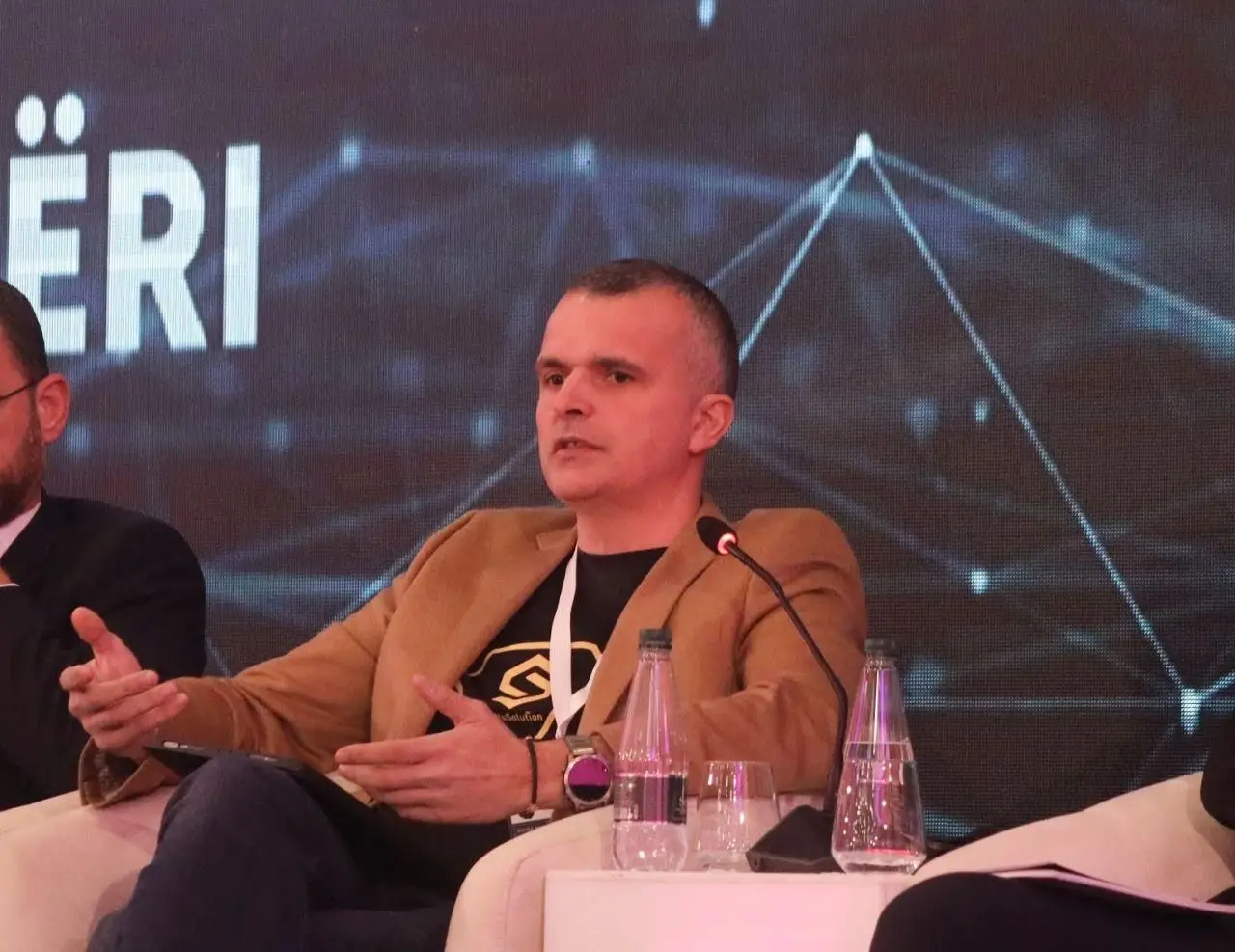
Aktualisht, bizneset shqiptare po përballen me mungesën e fuqisë punëtore si një nga sfidat kryesore. Për arsye të ndryshme ku hyjnë emigrimi masiv, mungesa e kualifikimit, kërkesat e gjeneratës së re, të cilët janë më shumë se sa një pagë konkuruese apo edhe arsye të tjera. Në përgjigje të kësaj problematike bizneset kanë nisur reflektimin, duke rritur pagat dhe duke rekrutuar punonjës të huaj për të mbushur boshllëqet e krijuara. Megjithatë në biznesin shqiptar ka shembuj shumë të mirë që tregojnë botëkuptimin e duhur të drejtuesve në raport me punonjësit e tyre. Një nga ato kompani është “SOFT&SOLUTION” dhe drejtuesi i saj Ermal Beqiri tregon “seketin” e kompanisë së tij në këtë aspect.
Shpëtim Luku: Z. Beqiri, ju jeni një figurë e njohur në industrinë teknologjike shqiptare. Çfarë ju dallon ju dhe kompaninë tuaj nga të tjerët?
Ermal Beqiri: Ajo që na bën unikë është përqendrimi te njerëzit. Ne besojmë se çdo produkt i suksesshëm lind nga një ekip i motivuar dhe i aftë. Prandaj, filozofia jonë është të investojmë në talent – qoftë duke ndihmuar studentët më të mirë të ndërtojnë karrierën e tyre, qoftë duke përmirësuar vazhdimisht stafin ekzistues. Për ne, njerëzit janë zemra e gjithçkaje që bëjmë.
Shpëtim Luku: Si e përzgjedhni dhe zhvilloni talentet në kompaninë tuaj?
Ermal Beqiri: Procesi fillon me identifikimin e talenteve të reja që dalin nga universitetet. Studentët më të mirë nuk i lëmë të presin; i marrim në kompani, i paguajmë për të mësuar dhe u ofrojmë një mjedis ku mund të zhvillohen profesionalisht. Ky proces jo vetëm që na ndihmon të gjejmë individët më të aftë, por edhe të ndërtojmë një ekip që është i përkushtuar që nga dita e parë.
Shpëtim Luku: Çfarë roli luan trajnimi në zhvillimin e stafit tuaj?
Ermal Beqiri: Trajnimi është një pjesë thelbësore e kulturës sonë. Ne besojmë se të mësuarit nuk duhet të ndalet kurrë, sidomos në një industri si teknologjia që ndryshon me shpejtësi. Stafi ynë merr trajnim të vazhdueshëm jashtë kufinjve për t’u përditësuar me teknologjitë më të fundit. Për ne, trajnimi nuk është thjesht një opsion – është një standard që garanton suksesin e përbashkët. E vecanta jonë është që cdo punonjës i joni, zgjedh vetë mënyrën dhe vendin ku do të trajnohet.
Shpëtim Luku: Si e shpërbleni dhe motivoni ekipin tuaj?
Ermal Beqiri: Përveç pagave konkurruese që krahasohen me nivelet europiane, ne kemi krijuar mundësi të veçanta për stafin tonë më të mirë. Një nga praktikat tona është t’i ofrojmë mundësinë për të punuar një javë jashtë vendit, në një mjedis të qetë dhe frymëzues. Kjo jo vetëm që i ndihmon të rifreskojnë energjitë, por gjithashtu rrit produktivitetin dhe kreativitetin. Është mënyra jonë për të thënë “faleminderit” dhe për të treguar që puna e tyre vlerësohet.
Shpëtim Luku: Ju përmendët mbajtjen e talenteve në Shqipëri. Si e arrini këtë?
Ermal Beqiri: Shqipëria ka një potencial të jashtëzakonshëm në fushën e teknologjisë, dhe një nga qëllimet tona është që ky potencial të mos humbasë. Duke ofruar paga konkurruese, trajnime të avancuara dhe një kulturë pune që i nxit individët të rriten, ne sigurojmë që talentet të ndihen të vlerësuar dhe të kenë mundësi për të ndërtuar karrierën e tyre këtu, pa pasur nevojë të largohen. Kjo është një filozofi që na bën krenarë dhe që vazhdimisht jep rezultate pozitive.
Shpëtim Luku: Si e shikoni të ardhmen e industrisë së teknologjisë në Shqipëri?
Ermal Beqiri: Shqipëria ka potencial të madh për t’u bërë një qendër e rëndësishme teknologjike në rajon. Por për ta arritur këtë, duhet të vazhdojmë të investojmë në njerëz dhe të ndërtojmë një ekosistem që mbështet inovacionin. Me angazhimin e duhur, jam i bindur se mund të vendosim një standard të ri dhe të tregojmë se edhe një vend i vogël mund të ketë ndikim të madh në tregjet globale.
Shpëtim Luku: Në përfundim, cila është motoja që ju udhëheq si lider në këtë industri?
Ermal Beqiri: Motoja ime është e thjeshtë: Kur investon në njerëz, krijon të ardhmen. Njerëzit janë investimi më i rëndësishëm, dhe kur kujdesesh për ta, ata kujdesen për suksesin e kompani
Getting Started with NLTK: 10 Essential Examples for Natural Language Processing in Python by Daniel Wu
Natural language understanding is the process of identifying the meaning of a text, and it’s becoming more and more critical in business. Natural language understanding software can help you gain a competitive advantage by providing insights into your data that you never had access to before. For computers to get closer to having human-like intelligence and capabilities, they need to be able to understand the way we humans speak. And that’s where natural language understanding comes into play.
Sentiment analysis is an artificial intelligence-based approach to interpreting the emotion conveyed by textual data. NLP software analyzes the text for words or phrases that show dissatisfaction, happiness, doubt, regret, and other hidden emotions. It is a method of extracting essential features from row text so that we can use it for machine learning models.
Also, some of the technologies out there only make you think they understand the meaning of a text. You must also take note of the effectiveness of different techniques used for improving natural language processing. The advancements in natural language processing from rule-based models to the effective use of deep learning, machine learning, and statistical models could shape the future of NLP.
In this example, we first download the perluniprops and nonbreaking_prefixes packages, which are required for the Moses tokenizer. We then load the Moses tokenizer and model for translating from English to French. We tokenize the input sentence using the tokenizer, and translate it using the model. In this example, we first download the punkt package, which contains data required by the tokenizer. We then import the word_tokenize function from the tokenize module. Finally, we apply the function to the input text and store the resulting tokens in a variable called tokens.
One of the popular examples of such chatbots is the Stitch Fix bot, which offers personalized fashion advice according to the style preferences of the user. The next entry among popular NLP examples draws attention towards chatbots. As a matter of fact, chatbots had already made their mark before the arrival of smart assistants such as Siri and Alexa. Chatbots were the earliest examples of virtual assistants prepared for solving customer queries and service requests. The first chatbot was created in 1966, thereby validating the extensive history of technological evolution of chatbots.
TF-IDF stands for Term Frequency — Inverse Document Frequency, which is a scoring measure generally used in information retrieval (IR) and summarization. The TF-IDF score shows how important or relevant a term is in a given document. If accuracy is not the project’s final goal, then stemming is an appropriate approach. If higher accuracy is crucial and the project is not on a tight deadline, then the best option is amortization (Lemmatization has a lower processing speed, compared to stemming). In the code snippet below, many of the words after stemming did not end up being a recognizable dictionary word. As shown above, all the punctuation marks from our text are excluded.
Meanwhile, the knowledge gained from acquisition does enable spontaneous speech and language production. The “acquired” system is what grants learners the ability to actually utilize the language. One way is via acquisition and is akin to how children acquire their very first language.
The Einstein Trust Layer only works with specific trusted partners, including Tableau Cloud. As a result, our AI-driven capabilities like Tableau Pulse depend on this service and must work through Tableau Cloud. Tableau launched Ask Data in 2019 to lower the barrier to entry for analytics and enable more people to experience the power of data exploration. Ask Data uses a keyword-based system to map user intent to analytical query and visualization. And several updates have been made to Ask Data over the years, including the addition of type-ahead support and iterative search capabilities. Unsupervised NLP uses a statistical language model to predict the pattern that occurs when it is fed a non-labeled input.
It can speed up your processes, reduce monotonous tasks for your employees, and even improve relationships with your customers. A creole such as Haitian Creole has its own grammar, vocabulary and literature. It is spoken by over 10 million people worldwide and is one of the two official languages of the Republic of Haiti. In this article, you’ll learn more about what NLP is, the techniques used to do it, and some of the benefits it provides consumers and businesses. At the end, you’ll also learn about common NLP tools and explore some online, cost-effective courses that can introduce you to the field’s most fundamental concepts.
International constructed languages
This makes for fun experiments where individuals will share entire sentences made up entirely of predictive text on their phones. The results are surprisingly personal and enlightening; they’ve even been highlighted by several media outlets. MonkeyLearn is a good example of a tool that uses NLP and machine learning to analyze survey results.
That actually nailed it but it could be a little more comprehensive. The effective classification of customer sentiments about products and services of a brand could help companies in modifying their marketing strategies. For example, businesses can recognize bad sentiment about their brand and implement countermeasures before the issue spreads out of control. You can also find more sophisticated models, like information extraction models, for achieving better results.
Semantic understanding
SpaCy is an open-source natural language processing Python library designed to be fast and production-ready. They employ a mechanism called self-attention, which allows them to process and understand the relationships between words in a sentence—regardless of their positions. This self-attention mechanism, combined with the parallel processing capabilities of transformers, helps them achieve more efficient and accurate language modeling than their predecessors. The term “natural” almost presupposes that there are unnatural methods of learning a language. The Natural Approach is method of second language learning that focuses on communication skills and language exposure before rules and grammar, similar to how you learn your first language.
The models are programmed in languages such as Python or with the help of tools like Google Cloud Natural Language and Microsoft Cognitive Services. We resolve this issue by using Inverse Document Frequency, which is high if the word is rare and low if the word is common across the corpus. NLP is growing increasingly sophisticated, yet much work remains to be done. Current systems are prone to bias and incoherence, and occasionally behave erratically. Despite the challenges, machine learning engineers have many opportunities to apply NLP in ways that are ever more central to a functioning society.
TextBlob is a Python library designed for processing textual data. Pragmatic analysis deals with overall communication and interpretation of language. It deals with deriving meaningful use of language in various situations. If you’d like to learn how to get other texts to analyze, then you can check out Chapter 3 of Natural Language Processing with Python – Analyzing Text with the Natural Language Toolkit.
The raw text data often referred to as text corpus has a lot of noise. There are punctuation, suffices and stop words that do not give us any information. Text Processing involves preparing the text corpus to make it more usable for NLP tasks. NLP tools process data in real time, 24/7, and apply the same criteria to all your data, so you can ensure the results you receive are accurate – and not riddled with inconsistencies.
There are examples of NLP being used everywhere around you , like chatbots you use in a website, news-summaries you need online, positive and neative movie reviews and so on. Since you don’t need to create a list of predefined tags or tag any data, it’s a good option for exploratory analysis, when you are not yet familiar with your data. This example of natural language processing finds relevant topics in a text by grouping texts with similar words and expressions.
These are the types of vague elements that frequently appear in human language and that machine learning algorithms have historically been bad at interpreting. Now, with improvements in deep learning and machine learning methods, algorithms can effectively interpret them. These improvements expand the breadth and depth of data that can be analyzed. In this example, we first download the punkt, averaged_perceptron_tagger, and wordnet packages, which are required by the lemmatizer. We then tokenize the input text using the word_tokenize() function, and apply POS tagging to the resulting tokens using the pos_tag() function. We then apply lemmatization to each word using a list comprehension and the WordNetLemmatizer class, which takes into account the part-of-speech tags of the words.
And despite volatility of the technology sector, investors have deployed $4.5 billion into 262 generative AI startups. Natural language understanding is a field that involves the application of artificial intelligence techniques to understand human languages. Natural language understanding aims to achieve human-like communication with computers by creating a digital system that can recognize and respond appropriately to human speech.
Additional ways that NLP helps with text analytics are keyword extraction and finding structure or patterns in unstructured text data. There are vast applications of NLP in the digital world and this list will grow as businesses and industries embrace and see its value. While a human touch is important for more intricate communications issues, NLP will improve our lives by managing and automating smaller tasks first and then complex ones with technology innovation. We don’t regularly think about the intricacies of our own languages. It’s an intuitive behavior used to convey information and meaning with semantic cues such as words, signs, or images.
Recent Posts
Another method is actively seeking out the native speakers who are living in your area. Chances are they already have a local association that hosts cultural activities such as food raves and language meetups like these in New York. Going to a country to acquire its national language only works when you’re actually exposing yourself to the myriad of available experiences in the country of choice. There’s so much you can do, short of going to a country where your target language is spoken, to make picking up a language as immersive and as natural as possible.
Afterward, we will discuss the basics of other Natural Language Processing libraries and other essential methods for NLP, along with their respective coding sample implementations in Python. Named entities are noun phrases that refer to specific locations, people, organizations, and so on. With named entity recognition, you can find the named entities in your texts and also determine what kind of named entity they are. NLP enables automatic categorization of text documents into predefined classes or groups based on their content. This is useful for tasks like spam filtering, sentiment analysis, and content recommendation. Classification and clustering are extensively used in email applications, social networks, and user generated content (UGC) platforms.
The stop words like ‘it’,’was’,’that’,’to’…, so on do not give us much information, especially for models that look at what words are present and how many times they are repeated. Natural language processing is one of the most promising fields within Artificial Intelligence, and it’s already present in many applications we use on a daily basis, from chatbots to search engines. Once you get the hang of these tools, you can build a customized machine learning model, which you can train with your own criteria to get more accurate results. SaaS platforms are great alternatives to open-source libraries, since they provide ready-to-use solutions that are often easy to use, and don’t require programming or machine learning knowledge. So for machines to understand natural language, it first needs to be transformed into something that they can interpret. Once NLP tools can understand what a piece of text is about, and even measure things like sentiment, businesses can start to prioritize and organize their data in a way that suits their needs.
Businesses are inundated with unstructured data, and it’s impossible for them to analyze and process all this data without the help of Natural Language Processing (NLP). Healthcare professionals can develop more efficient workflows with the help of natural language processing. During procedures, doctors can dictate their actions and notes to an app, which produces an accurate transcription. NLP can also scan patient documents to identify patients who would be best suited for certain clinical trials. The letters directly above the single words show the parts of speech for each word (noun, verb and determiner). One level higher is some hierarchical grouping of words into phrases.
Natural language processing offers the flexibility for performing large-scale data analytics that could improve the decision-making abilities of businesses. NLP could help businesses with an in-depth understanding of their target markets. NLP is an exciting and rewarding discipline, and has potential to profoundly impact the world in many positive ways. Unfortunately, NLP is also the focus of several controversies, and understanding them is also part of being a responsible practitioner.
Syntactic analysis
This is particularly challenging when dealing with domain-specific jargon, slang, or neologisms. Stemming reduces words to their root or base form, eliminating variations caused by inflections. For example, the words “walking” and “walked” share the root “walk.” In our example, the stemmed form of “walking” would be “walk.” Hover your mouse over the subtitles to instantly view definitions. Thoughts like, “I need to learn this now” or “I’ve got two months to learn this list” won’t be helpful to your cause.
Then apply normalization formula to the all keyword frequencies in the dictionary.
Fortunately, you have some other ways to reduce words to their core meaning, such as lemmatizing, which you’ll see later in this tutorial.
You will notice that the concept of language plays a crucial role in communication and exchange of information.
If you don’t yet have Python installed, then check out Python 3 Installation & Setup Guide to get started.
After that, you can loop over the process to generate as many words as you want.
Now that you have relatively better text for analysis, let us look at a few other text preprocessing methods. As we already established, when performing frequency analysis, stop words need to be removed. It supports the NLP tasks like Word Embedding, text summarization and many others.
Now, imagine all the English words in the vocabulary with all their different fixations at the end of them. To store them all would require a huge database containing many words that actually have the same meaning. Popular algorithms for stemming include the Porter stemming algorithm from 1979, which still works well. Most higher-level NLP applications involve aspects that emulate intelligent behaviour and apparent comprehension of natural language.
For example, “the thief” is a noun phrase, “robbed the apartment” is a verb phrase and when put together the two phrases form a sentence, which is marked one level higher. Though natural language processing tasks are closely intertwined, they can be subdivided into categories for convenience. The models could subsequently use the information to draw accurate predictions regarding the preferences of customers. Businesses can use product recommendation insights through personalized product pages or email campaigns targeted at specific groups of consumers. NLP works through normalization of user statements by accounting for syntax and grammar, followed by leveraging tokenization for breaking down a statement into distinct components. Finally, the machine analyzes the components and draws the meaning of the statement by using different algorithms.
A “stem” is the part of a word that remains after the removal of all affixes. For example, the stem for the word “touched” is “touch.” “Touch” is also the stem of “touching,” and so on. Noun phrases are one or more words that contain a noun and maybe some descriptors, verbs or adverbs. The idea is to group nouns with words that are in relation to them. Georgia Weston is one of the most prolific thinkers in the blockchain space. In the past years, she came up with many clever ideas that brought scalability, anonymity and more features to the open blockchains.
How to use GPT as a natural language to SQL query engine – InfoWorld
How to use GPT as a natural language to SQL query engine.
NLTK is a powerful and flexible tool for natural language processing in Python. These examples are just a small sample of what NLTK is capable of, and with some creativity and knowledge of NLP techniques, NLTK can be used to solve a wide range of natural language processing problems. Text analytics converts unstructured text data into meaningful data for analysis using different linguistic, statistical, and machine learning techniques.
The function returns a list of tuples, where each tuple contains a word and its corresponding part-of-speech tag. We, as humans, perform natural language processing (NLP) considerably well, but even then, we are not perfect. We often misunderstand one thing for another, and we often interpret the same sentences or words differently. NLP powers intelligent chatbots and virtual assistants—like Siri, Alexa, and Google Assistant—which example of natural language can understand and respond to user commands in natural language. They rely on a combination of advanced NLP and natural language understanding (NLU) techniques to process the input, determine the user intent, and generate or retrieve appropriate answers. When you’re analyzing data with natural language understanding software, you can find new ways to make business decisions based on the information you have.
Let’s say you have text data on a product Alexa, and you wish to analyze it. For example, MonkeyLearn offers a series of offers a series of no-code NLP tools that are ready for you to start using right away. If you want to integrate tools with your existing tools, most of these tools offer NLP APIs in Python (requiring you to enter a few lines of code) and integrations with apps you use every day. Named Entity Recognition (NER) allows you to extract the names of people, companies, places, etc. from your data.
What is Natural Language Understanding & How Does it Work? – Simplilearn
What is Natural Language Understanding & How Does it Work?.
You can foun additiona information about ai customer service and artificial intelligence and NLP. A major drawback of statistical methods is that they require elaborate feature engineering. Since 2015,[22] the statistical approach was replaced by the neural networks approach, using word embeddings to capture semantic properties of words. Natural Language Processing has created the foundations for improving the functionalities of chatbots.
In the above output, you can see the summary extracted by by the word_count. Now, I shall guide through the code to implement this from gensim. Our first step would be to import the summarizer from gensim.summarization. The below code demonstrates how to get a list of all the names in the news . Let us start with a simple example to understand how to implement NER with nltk . It is a very useful method especially in the field of claasification problems and search egine optimizations.
Natural language generation is the process by which a computer program creates content based on human speech input. There are several benefits of natural language understanding for both humans and machines. Humans can communicate more effectively with systems that understand their language, and those machines can better respond to human needs.
Input refers to what’s being relayed to the language learner—the “packages” of language that are delivered to and received by the listener. Bothering with correct grammar comes late in the acquisition stage. In the Natural Approach, the early stages are replete with grammatically incorrect communication that aren’t really implicitly corrected. The basic principles of the theory can be broken into four major stages of language acquisition. If we want to know the secrets of picking up a new language, we should observe how a child gets his first.
It helps machines process and understand the human language so that they can automatically perform repetitive tasks. Examples include machine translation, summarization, ticket classification, and spell check. Understanding human language is considered a difficult task due to its complexity. For example, there are an infinite number of different ways to arrange words in a sentence. Also, words can have several meanings and contextual information is necessary to correctly interpret sentences.
For example, if $100,000 of annual revenue relates to sales made on credit, the allowance estimate will equal the percentage chosen multiplied by the $100,000. Alternatively, you may find that applying different percentages to various portions of the AR balance based on the number of days payment is late is more accurate. The differences between GAAP and IFRS in handling write-offs can lead to significant variations in reported earnings, assets, and equity. These discrepancies are crucial for stakeholders who rely on financial statements to make informed decisions. As the global business environment continues to evolve, the convergence of accounting standards remains a topic of ongoing discussion, with the potential to streamline these divergent practices in the future. From an accounting perspective, the direct write-off method can cause fluctuations in the income statement due to its immediate impact on net income.
Direct Write-Off Vs Allowance Method – Meaning, Differences & Similarities
According to the GAAP standards, expenses and revenues need to be recorded in the same accounting period. However, with the direct write-off method, the bad debt expense is not matched with the revenue it helps generate. Due to this, public companies that need to adhere to GAAP accounting standards cannot use the direct write-off method to account for uncollected invoices. The direct write-off method is an accounting method to record uncollectible accounts receivables. As per this method, a bad debt expense ledger account is recognized and written off when an invoice is found to be uncollectible.
Accounting Standards: Accounting Standards and the Direct Write Off Method: Navigating the Complexities
It’s crucial for stakeholders to understand these limitations and consider the broader implications on a company’s financial statements when using this method. For example, consider a company that makes a large sale in December but does not receive payment by the direct write-off method fiscal year-end. If the payment is still outstanding several months later and the company decides to write off the debt, the expense will be recognized in a different fiscal year than the revenue from the sale.
Provide a List of Sources, Including Accounting Standards and Authoritative Texts
Let us look at the examples of the allowance method to understand the concept better. My Accounting Course is a world-class educational resource developed by experts to simplify accounting, finance, & investment analysis topics, AI in Accounting so students and professionals can learn and propel their careers. Let us understand the direct write-off method journal entries with the help of a couple of examples.
Financial Consolidation & Reporting
While the direct write-off method isn’t in compliance with generally accepted accounting principles (GAAP), the allowance method is. Under this method, a company at the end of its business year needs to review its accounts receivable and estimate how much of the total figure it thinks it won’t be able to collect. Under the allowance method, a company needs to review their accounts receivable (unpaid invoices) and estimate what amount they won’t be able to collect. This estimated amount is then debited from the account Bad Debts Expense and credited to a contra account called Allowance for Doubtful Accounts, according to the Houston Chronicle.
Processing
It must be within the rules and laws framed by the bodies for an accounting of transactions so that a true and correct picture of the Financial Statements can be shown to the stakeholder of the entity.
By writing off bad debts only when they become apparent, businesses can avoid the complexities of estimating future uncollectible amounts.
For instance, a company experiencing a year with a substantial write-off may report lower profitability compared to a year with minimal write-offs.
The Internal Revenue Service (IRS) allows the direct write-off method for tax purposes, but only under certain conditions.
This action would be documented, assessed for consistency and compliance, and communicated to stakeholders to ensure transparency.
While it offers ease of use and immediate recognition of uncollectible amounts, it does not comply with GAAP due to its violation of the matching principle.
The direct write-off method is an accounting technique that records a loss when a customer account is deemed uncollectible.
However, for businesses seeking more accurate financial reporting, the allowance method may be more appropriate. By comprehending the nuances of the direct write-off method, businesses can make informed decisions about their accounting practices and maintain better control over their financial health. Implementing the Direct Write-Off Method requires meticulous attention to detail and a thorough understanding of the financial implications it has on a company’s books.
Small Businesses
This is why GAAP doesn’t allow the direct write off method for financial reporting. GAAP mandates that expenses be matched with revenue during the same accounting period. But, under the direct write off method, the loss may be recorded in a different accounting period than when the original invoice was posted. The IRS allows bad debts to be written off as a deduction from total taxable income, so it’s important to keep track of these unpaid invoices in one way or another.
You have been attempting to reach the customer for the $3,000 invoice for months and have received no response.
Under IFRS 15, revenue from the sale of goods is recognized when control is transferred to the customer.
Rather than writing off bad debt as unpaid invoices come in, the amount is tallied up only at the end of the accounting year.
The direct write-off method is a significant accounting practice that directly impacts the financial statements of a company.
Most of these debts are paid by the customer in a timely manner or without a delay.
By adjusting accounts receivable for estimated bad debts, the balance sheet reflects the net realizable value of receivables, providing stakeholders with a clearer understanding of what the company expects to collect.
Using the direct write-off method of accounting, a business owner can debit the bad debts expense account and credit accounts receivable.
The allowance method, on the other hand, compels you to declare bad debt expenses every fiscal year. While the direct write-off method may offer simplicity, it poses significant challenges from a regulatory perspective. It is often at odds with the principles of conservative accounting and does not provide the most accurate picture of a company’s financial health. As such, it is typically reserved for smaller, less complex businesses or for tax reporting purposes, rather than for presenting a transparent view of a company’s financial standing to investors and regulators.